
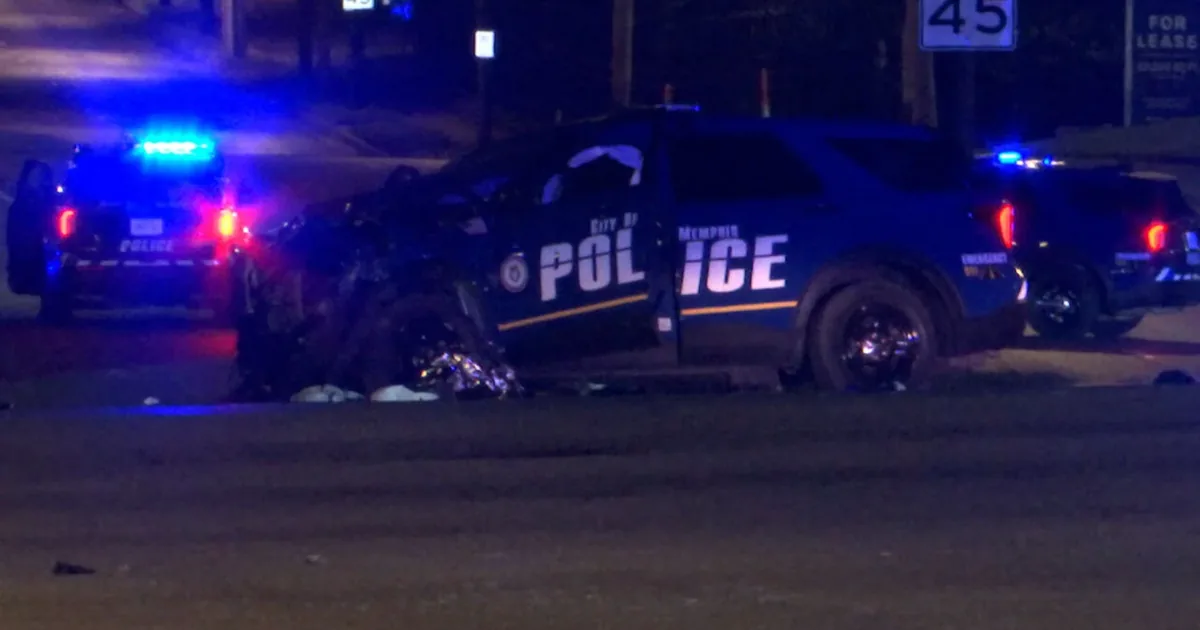
MEMPHIS, TN — The Tennessee Highway Patrol is investigating a deadly crash involving Memphis police in Hickory Hill after officers responding to a homicide call collided with another vehicle Sunday morning.
Five people in the other car were killed and a sixth passenger remains hospitalized. Two officers were also injured in the crash at Raines and Hickory Hill.
As investigators work to determine what happened, attention has turned to the Memphis Police Department rules that govern how officers drive when answering emergency calls.
What happened at Raines and Hickory Hill
According to the initial account from authorities, the officers were headed to a homicide call when the crash occurred at the intersection of Raines and Hickory Hill. The collision involved the police vehicle and another car.
The crash left a heavy toll. Five occupants of the civilian vehicle died, and a sixth person was taken to the hospital. The two officers involved were injured as well.
THP is still handling the investigation, and officials have not yet publicly detailed what led to the impact or whether any citations or policy violations have been identified.
How MPD says officers must respond to emergencies
FOX13 reviewed Memphis Police Department guidance posted in the department handbook on its website and found a section in the Field Operations chapter covering vehicle operation.
The policy says officers must use both blue lights and a siren when responding to an emergency call that requires going over the speed limit or passing through stop signs or traffic lights, and that this must happen before entering an intersection.
It also says that even though state law allows drivers of authorized emergency vehicles to break traffic rules in some situations, officers must do so with extreme caution.
Which calls are listed as emergency mode responses
The department policy lists specific situations when officers are expected to respond in emergency mode with lights and sirens. Those include armed robbery in progress, carjacking in progress, cobra alarms, criminal assault in progress, officer-in-distress calls, active shooting or stabbing incidents with injuries, and vehicle pursuits.
If the situation does not qualify as an emergency response, officers are directed to go to the scene while obeying all traffic laws.
The handbook draws a clear line between urgent calls and routine responses, placing the responsibility on officers to match their driving behavior to the type of call.
Stop sign and red light rules inside the department handbook
The policy also spells out what officers must do when approaching controlled intersections during an emergency response. It says they must come to a complete stop at a red light or stop sign before moving through the intersection.
That action, the handbook says, should only happen after using due care for the safety of others. The guidance reflects the department’s emphasis on slowing down and checking the roadway even when a call is urgent.
The same policy language suggests that emergency driving does not remove the duty to look for other vehicles, pedestrians, or any hazard that could be in the intersection.
A retired lieutenant says the rules are reinforced every shift
Michael Collins, a retired lieutenant with the Shelby County Sheriff’s Office, told FOX13 the policy is something officers are reminded about during every roll call before each shift.
He said the expectation is that officers clear intersections carefully, even when they have a green light. Collins described the need to reduce speed and treat the crossing as a place where extra caution is required.
His comments reflected the idea that emergency response does not erase basic traffic safety. In his view, drivers and officers alike still have to account for what is around them before moving through an intersection.
What drivers should remember around emergency vehicles
Collins also offered advice for motorists, saying drivers should stay focused on the road and keep their radios low enough to hear emergency vehicles approaching. He said paying attention is essential so drivers can react quickly and safely.
The crash has now become a reminder for both officers and the public about how much depends on visibility, speed and awareness at intersections. THP is continuing its investigation, and FOX13 said it had asked Memphis police whether officers followed policy.
The station said it will update the story when it gets a response from the department.
