
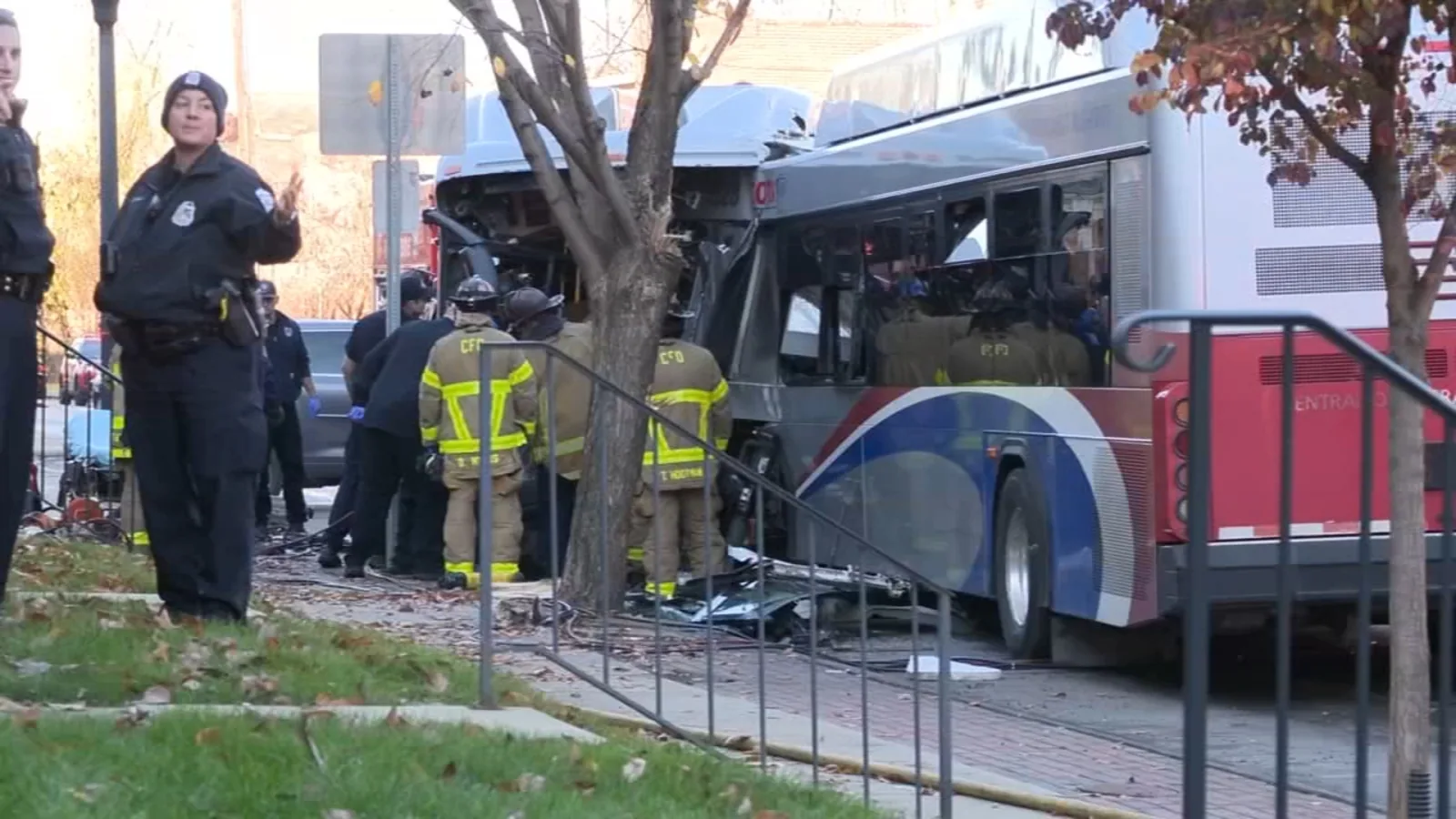
COLUMBUS, OH — Two Columbus transit bus drivers were killed and nine other people were hurt when two buses collided head-on in Ohio, police said. The crash involved vehicles operating for the city transit system and left both drivers dead at the scene, according to authorities.
Police have not released additional details about what led to the collision. The crash has raised immediate questions about how the two buses came to strike each other so forcefully and whether anyone else was critically injured.
What police have said so far about the deadly collision
Authorities have said the crash happened between two buses and that the impact was head-on. Beyond that basic account, investigators have not publicly laid out a timeline, identified a cause, or said whether weather, speed, road conditions, or a mechanical issue may have played a role.
The investigation is still active, and officials have not announced any charges or cited any suspected violations. For now, the confirmed details are limited to the number of dead and injured, along with the fact that both drivers were operating Columbus transit vehicles.
Police have not said how many passengers were on board each bus or whether any of the injured people were taken to a hospital in serious condition. Those details are still not public.
The drivers were among the dead in a crash that hurt nine others
Both people killed in the collision were bus drivers, making the crash especially devastating for the transit system and the community that relies on it. Transit workers often spend long hours on busy routes, and a deadly crash involving two of them is likely to prompt a close look at safety procedures.
The nine injured people add another layer to the tragedy, though officials have not broken down how many were passengers, drivers, or employees. Police have not released their names, and no ages were immediately provided.
Because the collision involved city buses, the crash is likely to affect service and operations while authorities sort out the facts. Officials have not yet said whether routes were delayed, suspended, or rerouted after the wreck.
Columbus transit officials face questions after the crash
Crashes involving public transit vehicles can quickly raise concerns about training, scheduling, vehicle maintenance, and road safety. In this case, the fact that two buses collided head-on makes the circumstances particularly unusual and serious.
Transit agencies generally review major incidents to determine whether changes are needed to protect riders and workers. That process can include examining driver assignments, vehicle condition, route design, and the roadway itself, although police have not yet said which issues, if any, are relevant here.
For riders in Columbus, the crash may prompt renewed attention to how the city’s buses operate on crowded roads and how quickly emergency crews can respond when something goes wrong.
The investigation remains open as officials withhold key details
At this stage, authorities have kept the public statement short and focused on the basics: two drivers killed, nine others hurt, and two buses involved. No more detailed explanation has been offered about where exactly the collision happened or what the immediate aftermath looked like.
That limited disclosure is common early in a serious crash investigation, especially when officials are still gathering witness accounts and reviewing physical evidence. Police typically wait to release more information until they can verify it.
For families of those involved, the lack of answers may be frustrating, but investigators appear to be treating the case as an active fatal crash rather than a closed incident.
Why the crash stands out in a city transit system
A head-on collision between two transit buses is rare enough to draw attention well beyond the immediate scene. Because buses are large vehicles designed to carry many people, even a single mistake or sudden hazard can create serious consequences.
This crash is also notable because it killed the two people responsible for driving the buses. That makes the loss not only a transportation story but also a workplace tragedy for Columbus transit employees and the agency that employs them.
As investigators work, the main unanswered questions remain the same: how the buses ended up in each other’s path, whether anyone else was critically harmed, and what changes may follow once the cause is known.
