
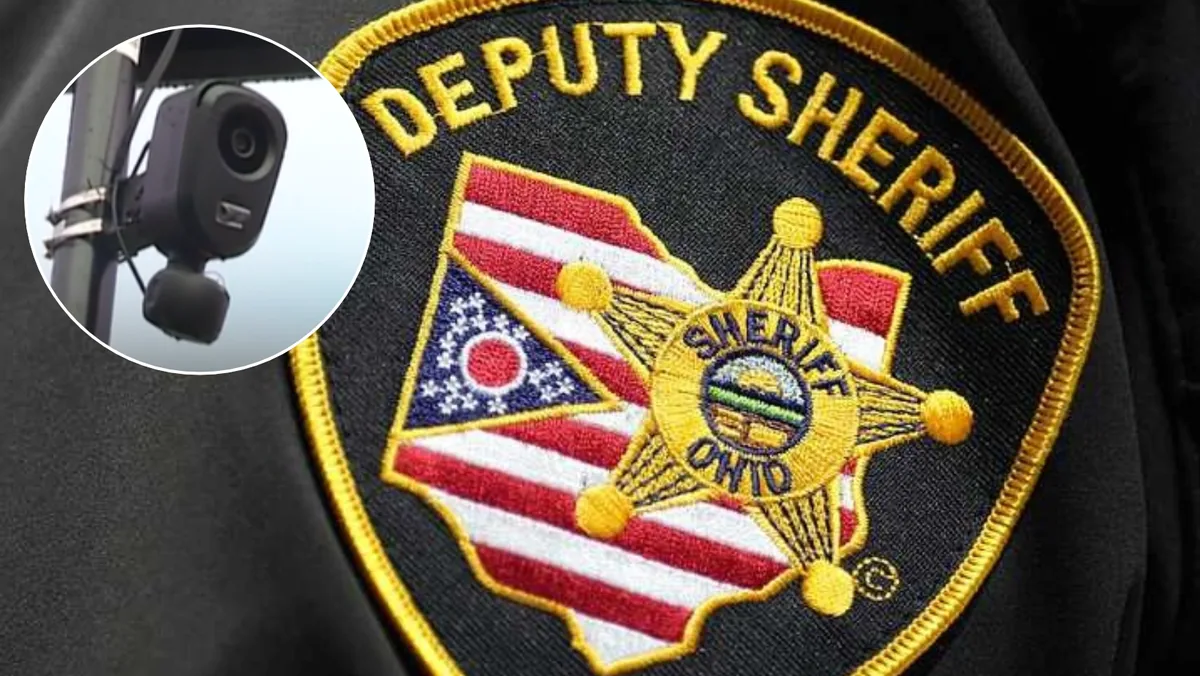
COLUMBUS, OH — Several of Ohio’s top law enforcement organizations are defending Flock cameras even as Governor-elect Amy Acton promises to push for a statewide ban. The Ohio Fraternal Order of Police joined three other groups in saying the technology remains a valuable crime-solving tool, but only if the state tightens rules around who can access the data and how that access is monitored.
The statement comes after a campaign in which Acton, the state’s former public health director, defeated businessman Vivek Ramaswamy in a hard-fought race. The two candidates split sharply on the cameras, with Acton aligning herself with the growing public backlash over privacy concerns and arguing that the system should be prohibited across Ohio if she is able to make it happen.
Police organizations say they want oversight, not open-ended access
The joint statement was signed by the Ohio FOP, the Ohio Association of Chiefs of Police, the Ohio Prosecuting Attorneys Association, and the Buckeye State Sheriffs’ Association. Together, they laid out three principles they say should govern the use of Flock cameras in Ohio: clearer rules and tougher penalties for officers who misuse the data, mandatory audits of police agencies, and stronger security and transparency requirements for the companies that provide the technology.
The groups said they understand why residents are worried about misuse. They also said law enforcement officers should be held to the same standards as everyone else when it comes to unauthorized access, which they described as a serious crime under Ohio law. Their message was that misuse should be punished, but the tool itself should remain available to help investigate crimes.
Those organizations framed the system as an investigative resource with real value for police, prosecutors, and sheriffs trying to solve cases. At the same time, they argued that preserving public trust will require tighter guardrails than some agencies have used so far.
Audits and public reporting are central to the unions’ proposal
The law enforcement groups said mandatory, regular audits should become standard across Ohio departments that have access to traffic camera data. Those audits, they said, should involve humans reviewing who is accessing the information, how often they are using it, and the purpose behind each search.
They also want agencies that allow abuse to face public reporting so civilian administrators can step in to protect privacy. The statement went further, saying police departments should track and report how many arrests are connected to Flock camera data, so officials can better prove the system is actually producing results.
In the unions’ view, public claims about the cameras’ usefulness should be backed by evidence rather than assumption. They said communities deserve to know whether the technology is helping solve cases often enough to justify the privacy risks that come with it.
Law enforcement leaders also call for stronger cybersecurity standards
Beyond user access, the statement pressed technology providers to meet stricter cybersecurity expectations. The groups said contracts and local officials should demand more transparency about how captured data is protected and what steps are taken if something goes wrong.
They recommended requirements covering cybersecurity standards, access controls, breach notification, data retention, and independent security audits. The aim, according to the statement, is to reduce the risk of abuse or data exposure while still allowing departments to use the system for legitimate investigations.
The unions also said the public should be told immediately when illegal misuse occurs. In their view, transparency is not optional if agencies want residents to trust the technology that records vehicle data and allows officers to search it later.
Acton’s ban push collides with Republican control in the legislature
Acton’s election raises the possibility of a major shift in how Ohio treats Flock cameras, but the path ahead is uncertain. The Ohio House of Representatives and Ohio Senate will remain in Republican hands, which could make it difficult for a ban to clear the legislature even if the new governor presses the issue.
That means the debate is likely to continue beyond the campaign trail and into state government. Acton has made clear she favors a full ban, while the police groups backing the cameras are trying to protect the technology by addressing the privacy complaints that have intensified across the state.
The divide reflects a broader question now facing Ohio: whether the cameras should be eliminated altogether or retained under a more restrictive system that limits misuse and improves public accountability.
Attorney general support could shape the next phase of the debate
The police organizations pointed to Attorney General-elect John Kulewicz as someone who has expressed support for allowing local departments to keep using Flock cameras. They said that position matches the view of current Attorney General Andy Wilson, who also supports continued use of the technology.
That alignment could matter as Ohio weighs any changes to the rules. Even with Acton preparing to take office, the unions are signaling that they want state leaders to focus on reforming the system rather than removing it entirely.
Both Kulewicz and Acton are Democrats, and their victories marked a rare shift in Ohio politics after two decades without the party holding either the governor’s office or the attorney general’s office. For now, though, the immediate issue is whether lawmakers and new state leaders will settle on a stricter framework or move toward the statewide ban Acton promised.
