
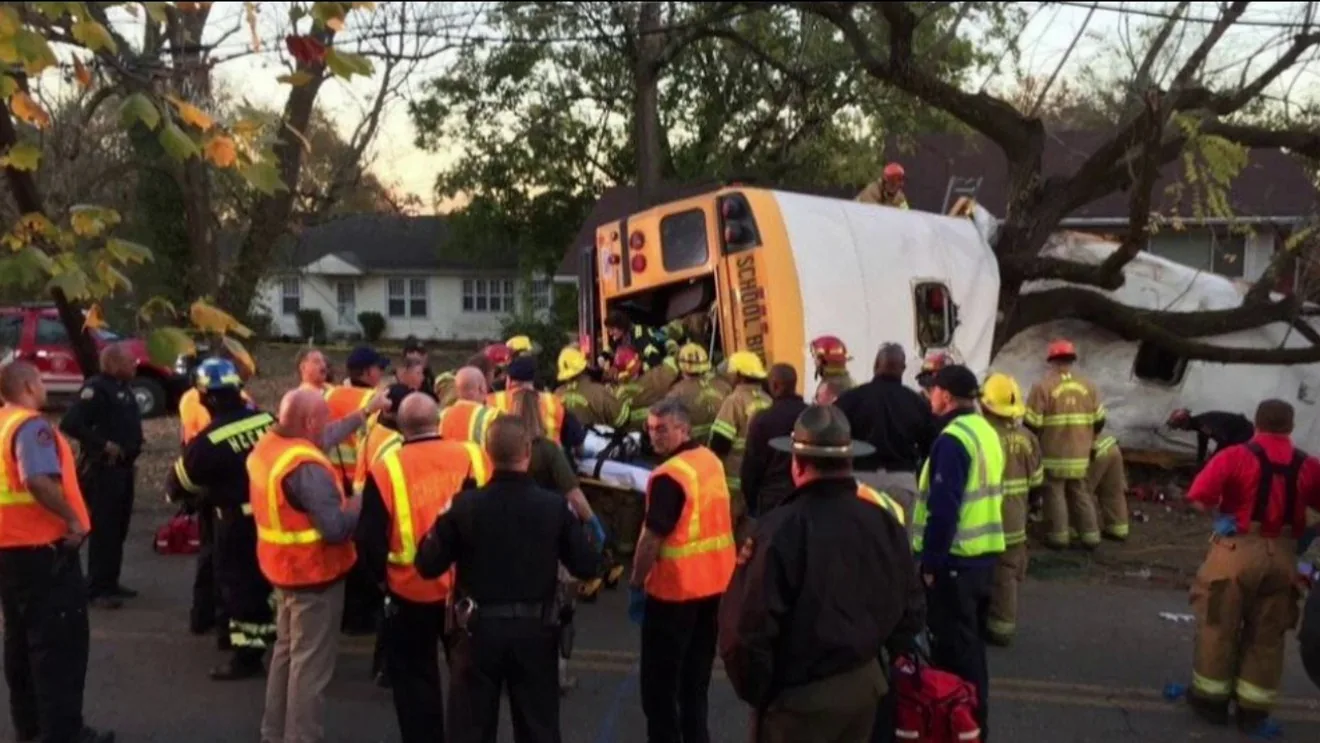
CHATTANOOGA, TN — A major school bus crash in Chattanooga is marking its 10th anniversary as Tennessee leaders revisit the rules for who can drive students and what safety equipment buses should carry. The wreck killed six children and injured 32 other students from Woodmore Elementary School, leaving a lasting imprint on school transportation policy across the state.
The collision also helped drive stricter state restrictions on school buses and the people behind the wheel. Now, with districts still reporting staffing problems, some lawmakers say the age requirement for drivers may be part of the problem. Others argue the crash is exactly why those limits should remain in place.
At the same time, new proposals are surfacing around seatbelts and other safety upgrades, keeping the debate alive a decade after the tragedy.
Crash aftermath still shapes Tennessee bus policy
The crash led Tennessee to tighten school bus rules after the deaths of six children in Hamilton County. Those changes included raising the minimum age for bus drivers, a move that was meant to strengthen safety standards after the fatal wreck.
Johnthony Walker, the driver, was convicted on six counts of negligent homicide. Prosecutors said during his trial that he was speeding and using his phone just before the crash. The legal case and the policy response that followed remain central to how Tennessee talks about school transportation today.
Even now, the Woodmore tragedy is being used as a reference point in legislative discussions. Supporters of tighter rules point to the loss of life as evidence that the state should be cautious. Those pushing for changes say the current rules may be making it harder for school districts to fill open positions.
Driver shortage fuels push to lower the minimum age
Former state Rep. Mike Sparks, a Republican from Smyrna, said in August that he planned to renew a bill lowering the required age for bus drivers to 23. He described the issue as part of a broader shortage of school bus drivers and said the measure would allow local districts to decide for themselves whether to use younger drivers.
“I think most folks know that we have a crisis and shortage of school bus drivers,” Sparks said during an August Transportation Committee meeting. He added that the proposal “makes it permissive for each local LEA.”
But Sparks lost his election in November, leaving the bill’s future uncertain. The timing adds another layer of doubt to an issue that has already been debated in committee and in districts dealing with day-to-day route coverage problems.
Local schools say staffing problems go beyond age limits
Some school leaders say the driver age rule is not the main reason buses are short-staffed. Marion County Schools is among the districts in the region struggling to keep routes covered, and Superintendent Dr. Mark Griffith said the system is constantly adjusting to fill gaps.
“We’re shifting around, doing everything and trying to get, trying to maintain routes, but we’re still having the same issues that we had previously,” Griffith said. He said he is open to lowering the minimum age, but he does not believe that change alone would solve the shortage.
Griffith said the problem is also about the nature of the job itself. “Nobody wants to drive. I mean, that’s the problem,” he said. He added that the work is often only about four hours a day, which makes it harder to attract full-time employees.
Seatbelt proposals return after fresh fatal crash in Carroll County
Driver shortages are not the only transportation issue now under discussion. Tennessee Sen. Mark Pody said in late March that he wants to push for seatbelts on every bus in the state during the coming session.
That idea has been raised before. After the Woodmore crash, U.S. Rep. Steve Cohen backed the federal Belts Act, which would have added seatbelts to all buses, but the measure did not pass. Pody’s new push came days after two students died in a crash in Carroll County, giving the issue renewed urgency.
Griffith said the seatbelt discussion has come up many times over the years. “I’ve been doing this job for 20 years and that’s been discussed every year prior to this,” he said. “You know, it’s something that we would obviously look at.”
Federal safety experts point to belts and collision avoidance
The National Transportation Safety Board says it recommends certain safety features to improve child transportation, including lap or shoulder belts on buses that can offer children more protection. The agency also says new buses should include collision avoidance technology.
Those recommendations are part of a broader national conversation about how to reduce the risk of serious bus crashes. In Tennessee, they are resurfacing alongside the debate over staffing, driver qualifications and whether local districts should have more flexibility in hiring.
For now, the discussion remains tied to the memory of the Chattanooga crash and to the practical problem districts say they face every day: finding enough drivers to keep buses running on schedule.
Walker faces a new court date on assault charge
The man convicted in the crash is scheduled to be back in court next week on a separate assault charge. Authorities say Walker broke into his ex-girlfriend’s apartment, accused her of being unfaithful and assaulted her.
A preliminary hearing is set to resume Monday afternoon in Nashville. The new case adds another legal chapter to a story that began with one of the most devastating school bus crashes in recent Tennessee history.
As the anniversary of the wreck arrives, the crash’s effects are still visible in courtrooms, classrooms and legislative halls. The questions raised then — about driver oversight, safety equipment and the rules governing school buses — are still unresolved.
