
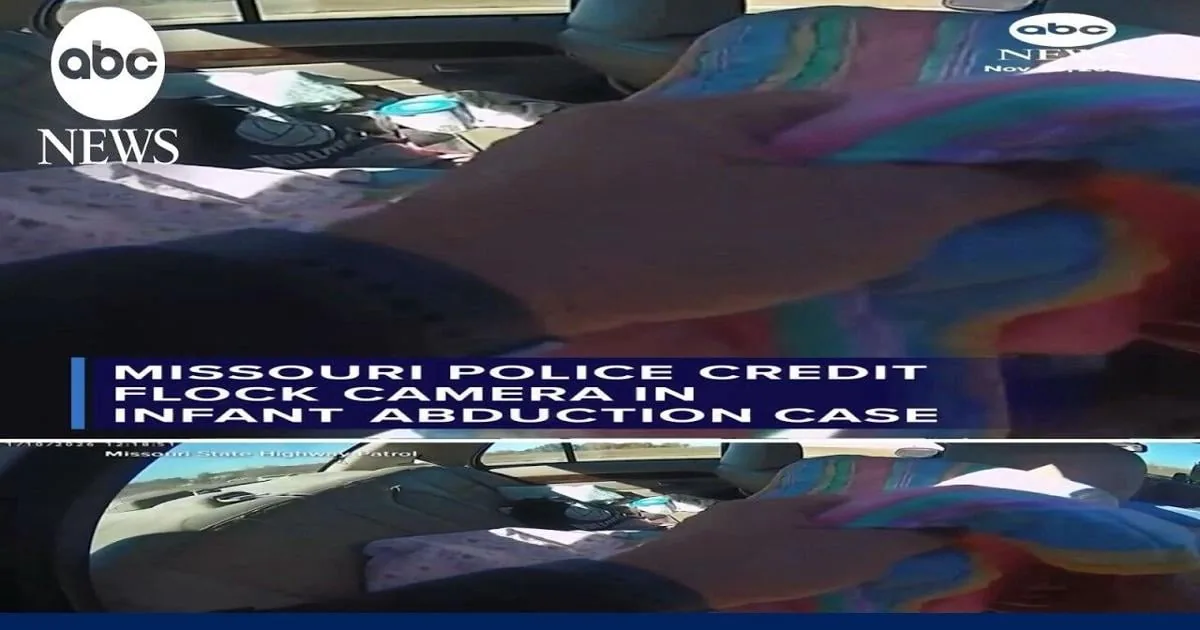
JEFFERSON CITY, MO — Police in Missouri say a Flock camera played a key role in finding a baby who authorities say was kidnapped. The child was located after officers were able to use the camera system to help track the vehicle tied to the abduction.
Law enforcement credited the technology with speeding up the search and giving officers a crucial lead in a case involving an infant. Officials have not publicly detailed every step of the investigation, but they say the camera information helped bring the child to safety.
How the camera system helped officers narrow the search
Flock cameras are part of a network of automated license plate readers used by many police agencies to identify vehicles and search for matches tied to crimes. In this case, Missouri police said the system helped them connect the vehicle to the kidnapping and move quickly on the search.
The technology can be especially useful when time matters. Police often rely on plate-reader alerts to identify a suspect vehicle’s path, locate possible sightings and coordinate with other agencies across different jurisdictions.
While officials did not release a detailed timeline, their account shows how a camera hit can serve as an immediate investigative lead. In an abduction involving a baby, even a short delay can matter, which is why police frequently emphasize rapid alerts from these systems.
Why infant abduction cases create urgent pressure for officers
Cases involving abducted children are among the most urgent police handle because officers must move fast to reduce the risk of harm. A missing infant can trigger an all-hands response, with investigators checking roads, vehicle descriptions and surveillance systems as quickly as possible.
That urgency often pushes police to use every available tool, including license plate readers, doorbell cameras and highway surveillance feeds. A confirmed lead can help narrow a search area and reduce the number of possible vehicles officers need to examine.
In this Missouri case, authorities said the camera helped them find the baby. They did not say whether the child was injured or provide additional public details about the circumstances of the kidnapping.
The expanding role of Flock-style readers in American policing
Automated plate readers have become a familiar part of modern policing in the United States. Departments use them to scan passing vehicles and compare plate numbers against databases connected to stolen cars, wanted suspects and other investigations.
Supporters say the systems can produce fast leads that officers might otherwise miss, especially in fast-moving cases or when witnesses cannot give a complete description. Police agencies often cite recovered vehicles, arrests and missing-person searches as examples of the technology’s practical value.
At the same time, the use of these systems has drawn broader public attention because they record large volumes of vehicle data. In this Missouri case, however, police presented the camera as a direct aid in locating a kidnapped infant rather than as part of a larger policy debate.
What police have and have not said about the kidnapping
Authorities credited the camera with helping find the child, but they did not release the full chain of events surrounding the kidnapping. They have not publicly identified the baby, the suspect or the vehicle in the information provided.
Police also did not say exactly where the camera alert occurred or how far the investigation extended before the child was found. Those details may be part of an active case review, or officials may be withholding them because of the sensitive nature of an infant abduction.
Even with limited public information, the case highlights how quickly officers can move when technology gives them a usable lead. In situations like this, a single camera match can be the difference between searching blindly and zeroing in on a suspect vehicle.
Why the case is likely to draw attention beyond Missouri
The incident is likely to resonate with law enforcement agencies across the country because it shows a high-stakes use of an increasingly common tool. Police departments nationwide are adopting camera networks for everything from stolen-vehicle alerts to missing-child searches.
For families and communities, the story underscores how dependent modern investigations have become on digital tracking. When a child is missing, officers may use social media, surveillance video and automated readers together to build a fast-moving picture of where the vehicle went.
Missouri police said the Flock system helped them find the abducted infant. That outcome will probably be cited by agencies that argue the technology can deliver real-world benefits in emergencies, especially when every minute counts.
