
KNOXVILLE, TN — Two unidentified remains cases from early 2025 are still unsolved in East Tennessee, even as investigators say the region appears to be seeing fewer new cases. The Knox County Regional Forensic Center is working with other agencies on both investigations and hopes DNA analysis and forensic genetic genealogy will help put names to the men and offer answers to families who may still be looking for them.
Forensic center Director and Chief Administrative Officer Chris Thomas said the office is using every tool available, including medical records, dental records and DNA comparisons, to move the cases forward. One set of remains was found in Harriman in January, while the other turned up in Knoxville in March. Both cases have now entered deeper identification work, but neither has been solved.
Harriman remains found by utility workers behind South Roane Street
The first case began on January 24, 2025, when utility workers clearing brush and trees behind a facility along South Roane Street in Harriman found skeletal remains. Officials said the area had last been cleared in January 2020, suggesting the remains had been undisturbed for years before the discovery.
The Harriman Police Department and the Tennessee Bureau of Investigation investigated, and an autopsy was ordered. The Knox County Regional Forensic Center said the remains are believed to be those of a white man who was about 5 feet 9 inches tall and estimated to be between 35 and 50 years old.
Along with the remains, investigators found black pants, a black belt, black socks, size 11.5 black Skechers boots, a gold metal Timex watch with a black band, pieces of a backpack, more clothing fragments and Narcan nasal spray. Those items may help narrow the search for a match, but so far they have not led to an identification.
Roane County funds DNA genealogy work on the Harriman case
After the discovery, Roane County worked to secure funding for forensic genetic genealogy through Othram Inc., a Texas-based laboratory that develops DNA profiles to help identify unidentified remains and locate relatives. That kind of testing can sometimes reveal family connections that standard identification methods miss.
Thomas said the forensic center is hopeful that the additional analysis will produce new leads and ultimately point investigators toward the man’s identity. The case remains open, but officials say the goal is not only to solve the mystery, but also to give someone waiting for news a definitive answer.
Forensic genetic genealogy has become an important tool in cases where skeletal remains offer few obvious clues. In this case, the clothing and personal items provide some context, but the strongest path forward appears to be DNA-based comparison rather than visual identification alone.
Knoxville drainage creek remains were badly deteriorated
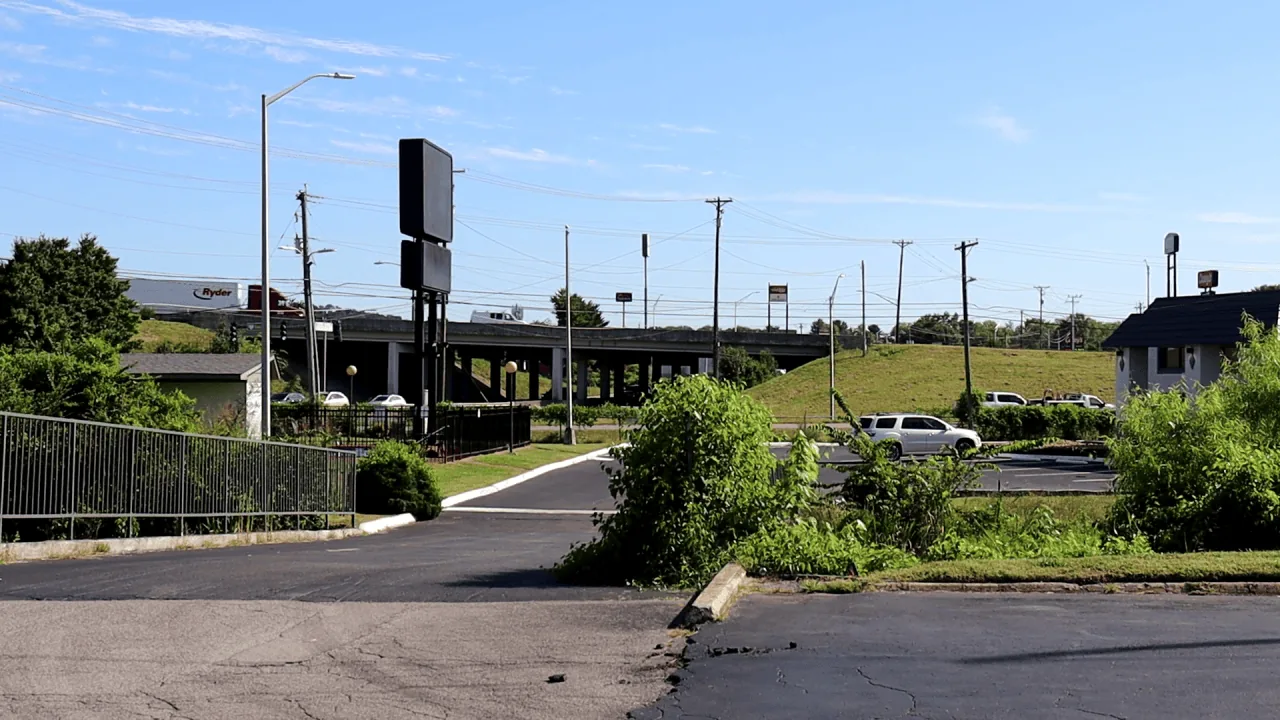
The second case involves partial skeletal remains found on March 14, 2025, behind a motel near exit 108 on Interstate 75 in Knoxville. A landscaping crew discovered the remains in a drainage creek mixed with mud and debris, in an area known to flood and become marsh-like.
Thomas said the conditions likely caused the remains to deteriorate over many years. The remains were partial and in poor condition, which made identification more difficult. Among what investigators found was a skull without a mandible, meaning dental X-rays and a head CT could still be useful tools if the right comparison case is identified.
Investigators reviewed several possible matches, but none turned out to be correct. The case also has been fully funded for forensic genetic genealogy, giving the forensic center another path to try as the investigation continues.
DNA testing corrected the early biological sex assessment
That Knoxville case also showed how limited skeletal evidence can lead to early uncertainty. Investigators initially believed the remains were female because of the size and stature of the bones recovered. After a bone sample was submitted for DNA testing, however, investigators learned the individual was a man.
Thomas said a forensic anthropologist later confirmed that the first assessment was based on limited skeletal material. Once DNA provided a clearer picture, the forensic center updated the case in the National Missing and Unidentified Persons System, or NamUs, so the search could focus on the correct identification possibilities.
NamUs now describes the remains as likely belonging to a Black man between 35 and 55 years old who stood between 5 feet 4 inches and 6 feet tall. Officials say that updated profile is important because it changes which missing-person cases are worth comparing against the remains.
Forensic center says its methods are helping slow the pace of new cases
Even with two unresolved cases, Thomas said the number of new unidentified remains cases appears to be slowing in East Tennessee. He credited the forensic center’s investigative office and medicolegal death investigators for using available resources quickly and systematically.
He said the team has been locating and reviewing old medical radiographs and dental X-rays, working with other agencies and medical providers, and collecting DNA samples for comparison and identification. Rapid DNA testing available on site has also helped speed up some of the work.
Compared with other larger Tennessee cities, the Knoxville and Harriman cases account for two of the 11 unidentified remains cases listed in NamUs since the start of 2025. Chattanooga and Gallatin each have one, while Memphis has four and Nashville has three. The numbers do not solve the cases, but they do suggest local investigators are dealing with a smaller share of newly reported remains than some other parts of the state.
