
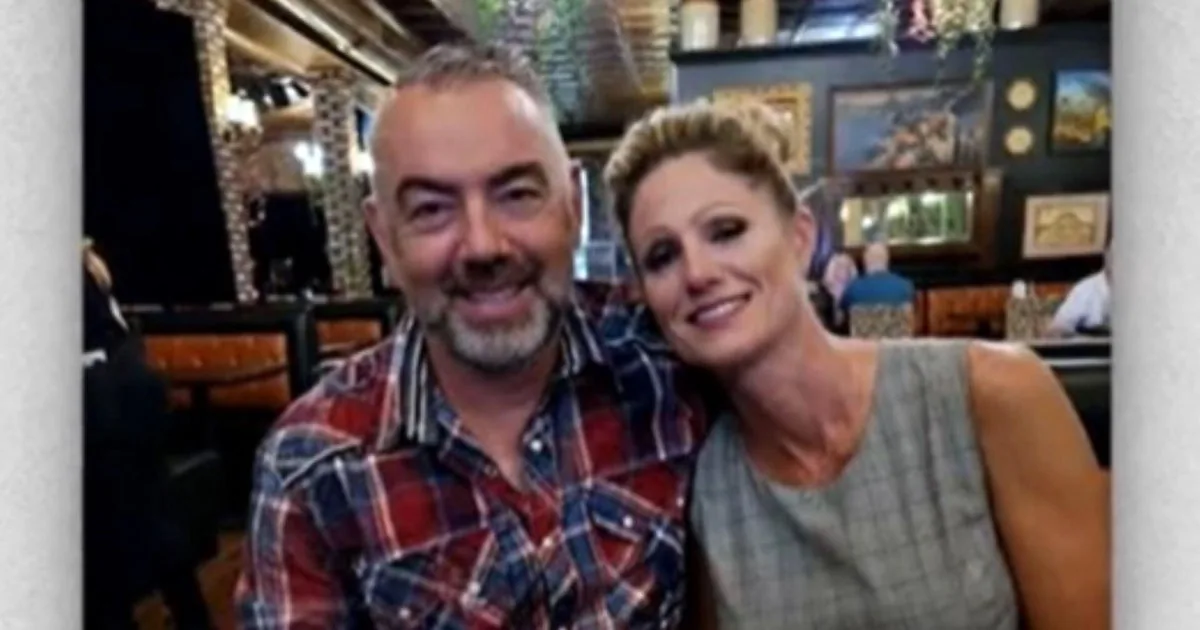
BURKESVILLE, KY — A murder tied to a lakeside mansion on the Tennessee-Kentucky border has ended in a conviction, but the case left behind a trail of unanswered questions, family grief and local folklore. Thomas O’Donnell was found guilty in the killing of Mike Harding, a California transplant whose body was discovered in a vacant property near Dale Hollow Lake in September 2022.
Investigators say Harding had been lured to the house with a fake service call, then shot to death. They also say his wife, California Highway Patrol Capt. Julie Harding, played a central role in a breakup that had become bitter over money, property and trust. Julie Harding later died by suicide at the same home, deepening the mansion’s reputation as a place where bad things happen.
How a missing person case led to a body in a vacant house
Mike Harding vanished in September 2022 after telling friends he was heading to an appointment at the property in Burkesville, Kentucky. He owned an HVAC business and believed he was responding to a job request from a realtor named James Fraser, investigators said.
Instead, the call had been arranged with a prepaid cellphone, one that detectives later described as a burner phone. When the property owner, David Hammersley, and his family walked through the vacant three-building site, they found the smell of decomposition and the body of a man on the floor of the cottage.
Prosecutor Ann Marie Gordon Anderson said Harding had likely been dead for about a week. Kentucky State Police Detective BJ Burton said Harding had been shot four times, twice in the torso and twice in the head, and that evidence had been removed from the scene.
Phone records and a fake realtor name became key clues
Once detectives examined Harding’s phone, they say the texts made the setup plain. The messages from Fraser asked Harding to check out the house, and the exchange ended with plans to meet shortly after 4 p.m., when Harding said he was 35 minutes away.
But investigators could not find any realtor by that name. Burton said the name was likely made up. The phone used to contact Harding also pointed detectives toward a long paper trail that later became central to the prosecution.
Burton said locational data showed the burner phone first came alive in the Houston area, where O’Donnell had previously lived. Investigators later compared that phone’s movements with O’Donnell’s personal cellphone and said the two devices traveled together through the South in the weeks before the killing.
The marriage broke down over money, fear and divorce filings
Mike and Julie Harding met online in 2018, after both had gone through divorces. They married in 2019 and bought the home overlooking Dale Hollow Lake, where they planned to retire. Friends and local officials described them as a couple that seemed happy at first.
That changed in 2022, according to people close to them. Friends said Julie began drinking more, acting differently and spending less time with Mike. Preston Cleary said Mike believed she was seeing another man, while Sergeant Brian Wittmer said Julie told him Mike might be involved in ghost guns, drugs and missing money.
By May 2022, Julie had filed for divorce. Mike later told friends he feared for his safety, and Sheriff Brandon Boone said he noticed chains and padlocks on the doors of Mike’s house after Mike said a gun had been stolen in a break-in. Boone said Mike appeared increasingly paranoid as the marriage collapsed.
Investigators focused on Thomas O'Donnell and the money trail
Detectives said the case turned on whether Julie Harding and O’Donnell had a relationship that went beyond frequent phone calls. Prosecutors said Julie’s cellphone records showed 194 calls with O’Donnell over two months before the murder, and that the calls stopped just days before Mike was killed.
Investigators also searched Julie’s background and found handwritten Post-it notes left at the house that appeared to mock the idea of hidden money. They say Julie had withdrawn about $360,000 from bank accounts, cash that Mike discussed with friends and his divorce lawyer before he died.
Authorities never proved that Julie paid O’Donnell, and defense attorneys argued the state could not show exactly how the money moved. Still, prosecutors said the timing of the calls, the burner phone and the stolen gun found later in O’Donnell’s truck made the case against him overwhelming.
Julie Harding's death added another twist to the case
Two months after the murder, police arrested O’Donnell in California after locating him at the Sacramento airport. In his truck, officers say they found Mike Harding’s stolen gun and a box of Hornady Critical Defense bullets, the same type of ammunition used in the killing. Julie Harding was arrested separately for criminal trespass after taking Mike’s dog Charlie from a friend’s home.
Days later, on Dec. 10, 2022, a mail carrier found Julie’s body near the family home in Tennessee. She had died by suicide, investigators said. Beside her was a bloodstained note to Mike that read, in part, that she had lived a good life until the previous year and that he had won by leaving her in a coffin.
Detectives said her death suggested she may have feared what was coming next, especially after O’Donnell’s arrest. Julie had already been suspended from the California Highway Patrol, and Boone said she was no longer protected by her badge or authority.
A jury convicted O'Donnell, but the family says the loss remains
O’Donnell went on trial in April 2026 in Cumberland County Justice Center in Burkesville. Prosecutors told jurors that Julie and O’Donnell planned the killing together and that the fake realtor story was part of a larger scheme to get Mike Harding to the house.
The defense said someone else could have been involved and challenged the state’s inability to recover the burner phone or murder weapon. Even so, the jury deliberated for only about two hours before returning a unanimous murder verdict.
O’Donnell was later sentenced to life in prison with the possibility of parole after 20 years. For Mike Harding’s children, Steven Harding and Heather Cavalieri, the conviction brought a measure of justice, but not closure. They said their father was a loving man whose death and the surrounding allegations cannot erase who he was.
